
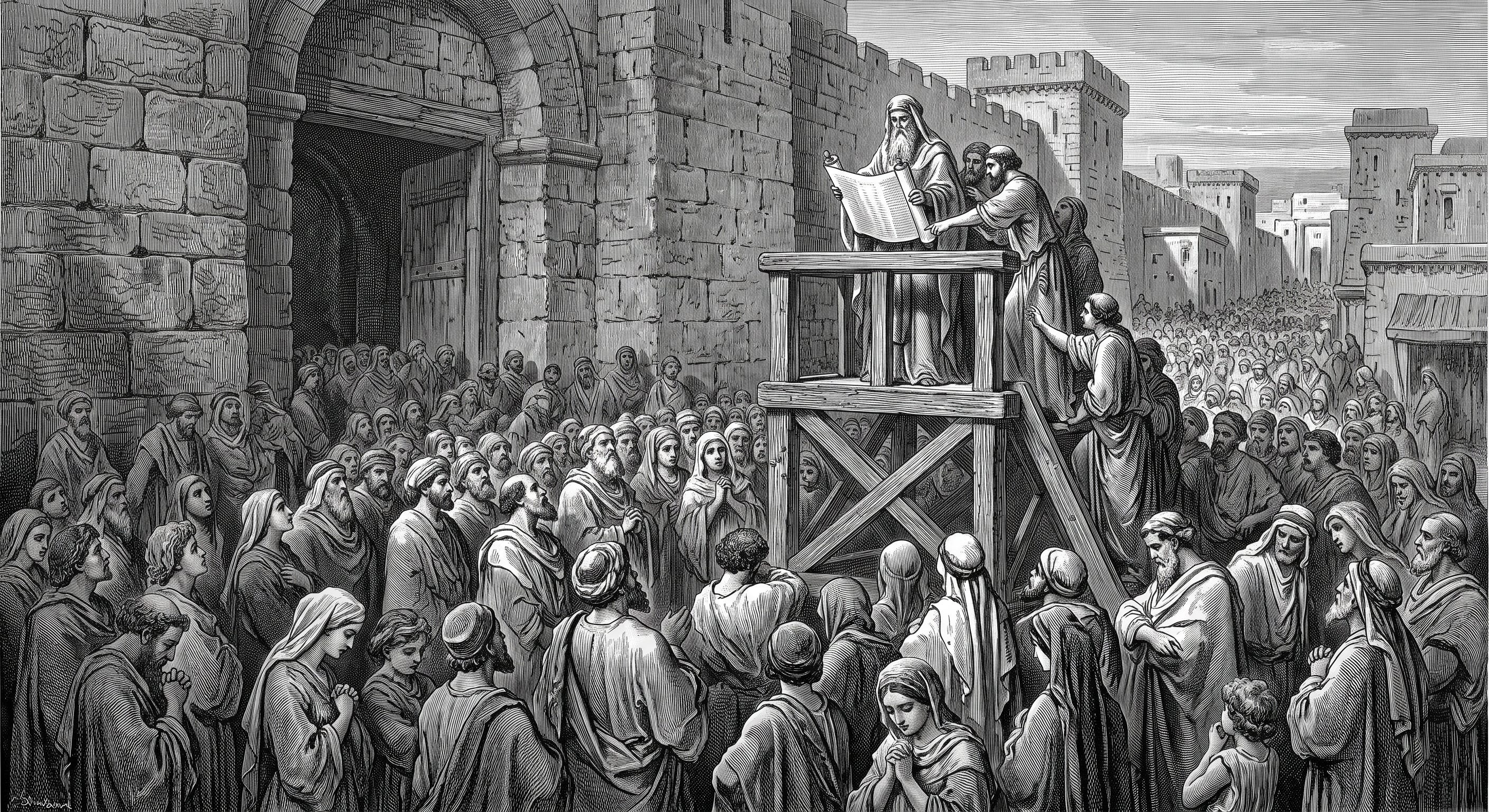
Expository preaching requires you to preach the Bible, not your convictions, preferences, or standards. Nehemiah chapter eight provides a wonderful blueprint for sound preaching that both edifies and exhorts the believer.
The term “expository” is an adjective that means “serving to explain” or “tending to illustrate.” Its verb form, “to expound,” means “to explain or comment on” and “to reveal the meaning.” Examples of this can be found in Scripture (Luke 24:27; Acts 18:26, 28:23).
When I mention expository preaching, some quickly think of merely a “running commentary” or an intense theological Bible study with no practical use. However, this is a misconception. When executed properly, a preacher can deliver a meaningful application for today’s Christian, grounded in Scriptural principles, without resorting to theatrics or a “camp meeting” style approach. After all, if the Bible cannot provoke a spiritual change in the believer’s heart, why do we think manufacturing a change would be better?
It’s interesting that many preachers criticize entertainment culture but then create their own shows filled with shouting, drama, and personal attacks. They often rely on storytelling, judge others’ spirituality by their own standards, and compare favorite preachers with those they dislike. This form of entertainment may avoid immodesty and rock concerts; however, neither approach truly honors God’s word.
When Ezra brought the law before the assembly at the Water Gate, the Levites followed five distinct principles that establish the foundation of expository preaching. This method lets the Bible convict the heart. This produces real, lasting, and meaningful change.
Here are the five principles:
-
Read directly from the written word of God.
Preach straight from the Scriptures. Do not use the verses as a springboard for personal opinions. Ezra stood upon a pulpit of wood and opened the book in the sight of all the people. The sermon begins and ends with the text. The preacher who steps into the pulpit without subjecting his mind to the scriptures abdicates his calling. You must submit your thoughts entirely to what God declared. John Stott warned against treating the biblical text as a convenient peg for miscellaneous ideas. The written word must dictate every phrase from the pulpit. -
Speak with clarity and precision.
Read the verses distinctly. Give every doctrine full weight without rushing or mumbling difficult passages. The Levites pronounced the words clearly so the assembly heard every commandment without ambiguity. When you mumble hard doctrines or skip verses to avoid controversy, you fail your listeners. Speak with volume, clarity, and precision. A faithful preacher articulates each syllable, honors the grammatical construction of the text, and lets the full weight of divine judgment and grace fall upon the ears of the congregation. -
Explain the true sense of the text.
Extract truth straight from the passage. John Stott and Bryan Chappell both emphasized drawing points directly from the author’s original intent, rather than forcing outside ideas into the pulpit. Do not twist verses to support pet topics, private grievances, or narrow camp traditions. Exegesis pulls the divine message out of the text. Eisegesis pushes human bias into the text. Your duty as a preacher is to explain what God meant when He gave the commandment. If your three points and application do not arise from the text, step down from the pulpit. -
Inform the mind before demanding a decision.
Explain the doctrine so the Holy Ghost confronts the conscience. The Levites caused the people to understand the law through patient instruction. Sound doctrine engages the intellect first. Never manipulate human emotion with dramatic music, theatrical pacing, or psychological pressure to manufacture shallow aisle decisions. When you bypass the mind to force an emotional reaction, you produce false converts and shallow disciples. True conviction occurs when the Holy Ghost applies sound doctrine to an informed conscience, bringing genuine brokenness and enduring spiritual repentance. -
Hold each hearer personally accountable.
Place listeners directly under the authority of God’s word. The people stood in their place before the Water Gate for hours, taking personal responsibility for their transgressions against the law. Strip away denominational excuses, camp loyalties, and tradition. An expositor refuses to let hearers hide behind church heritage, family lineage, or legalistic check-boxes. Every soul stands accountable before the judgment seat of God.
Preachers often abandon this pattern to build personal movements or enforce legalistic rules. They replace the rigorous work of exegesis with fiery storytelling, political complaints, and emotional manipulation. When you elevate human movements above the scriptures, religion turns narrow, carnal, and petty. If you do not expose the scripture, you deliver a speech instead of a sermon.
Preach the written word faithfully. When you submit your preaching to the authority of the text, you point your congregation directly to the living Word, Jesus Christ.
“So they read in the book in the law of God distinctly, and gave the sense, and caused them to understand the reading.” – Nehemiah 8:8